Tree care isn’t just about cutting branches or removing hazards. It’s about understanding how trees grow, respond to stress, and defend themselves over time. When trees are assessed, pruned, or treated without that knowledge, the long‑term consequences can be severe.
Working with a qualified arborist helps protect your trees, your property. Whether the service is pruning, removal, pest management, or long‑term care planning.
All Tree Work Starts with Proper Assessment
Every responsible tree service should begin with an inspection.
A trained arborist evaluates:
- Tree species and growth habits
- Structural integrity
- Existing wounds or defects
- Soil and root zone conditions
- Environmental stress factors
- Pest and disease indicators
Skipping this step often leads to work that looks productive in the short term — but creates lasting damage behind the scenes.
When Pruning Goes Wrong
One of the most common myths we hear is: “Don’t worry, it’ll grow right back.”
While trees are resilient, they don’t heal the way people do. Improper pruning can permanently alter structure, create decay pathways, and trigger stress responses that invite pests and disease.
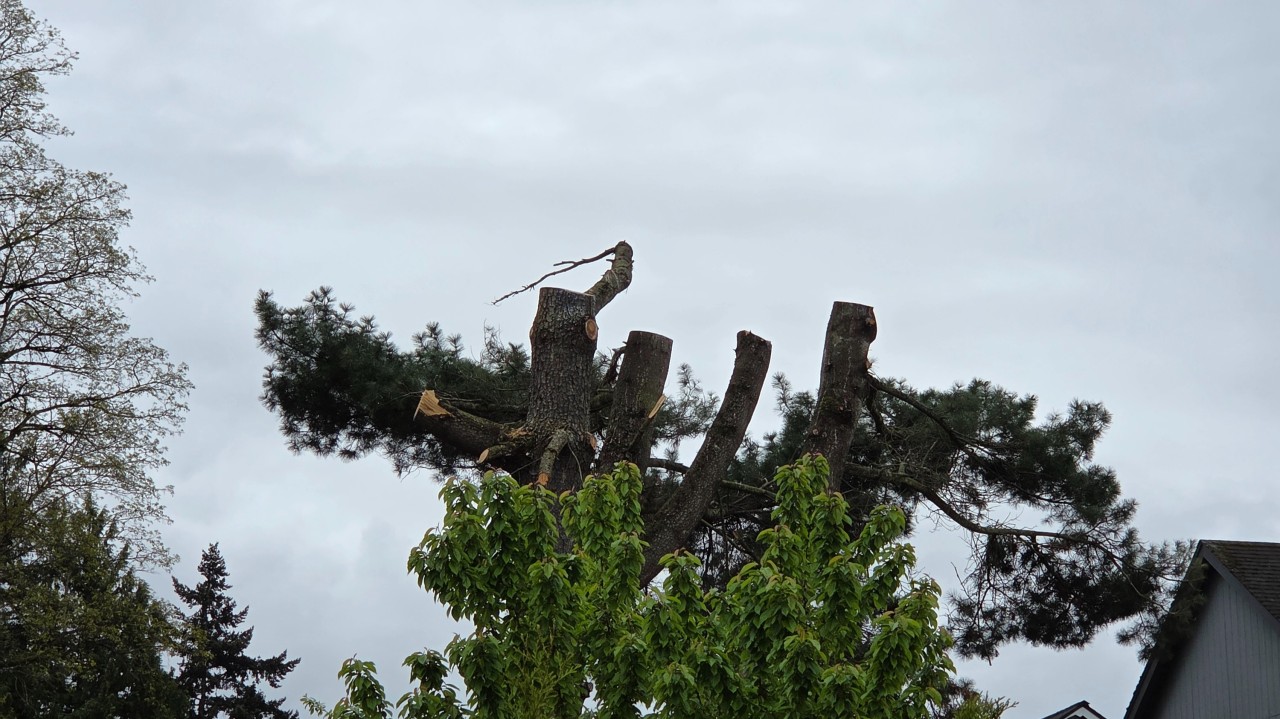
What We See in the Example Above
In the heading photo:
- Large scaffold limbs have been removed, eliminating a significant portion of the canopy
- Multiple oversized pruning cuts are visible along the main trunk
- Cuts were made without regard for branch collar protection
- The tree has lost its natural taper and balance
This level of canopy removal is considered severe over‑pruning. In many species, it leads to:
- Energy depletion
- Weak, fast‑growing sprouts
- Increased sunscald and bark stress
- Reduced ability to seal wounds
- Elevated risk of decay and bark beetle infestation
While some trees attempt to survive this type of damage, many never fully recover.
Over‑Pruning Creates Long‑Term Risk, Not Savings
Improper pruning often results in:
- Years of corrective work
- Ongoing monitoring for decline
- Increased pest pressure
- Higher likelihood of removal later
What appeared to be a cost‑saving prune often becomes far more expensive over time and even a city permit violation issued to the homeowner.
A qualified arborist knows:
- How much live canopy can safely be removed
- Where cuts should (and should not) be made
- When pruning should be delayed or avoided altogether
Sometimes, the right answer is less work — or no work at all. Check out the local PNW pruning guidelines.
Integrated Pest Management Requires Diagnosis, Not Guesswork
Stressed trees are more vulnerable to insects and disease — especially bark beetles and opportunistic pests.
Integrated Pest Management (IPM) focuses on:
- Identifying true causes of decline
- Reducing stressors first
- Monitoring pest thresholds
- Using targeted treatments only when necessary
Over‑pruned trees often trigger pest issues that wouldn’t have occurred otherwise. Spraying or treating without addressing the underlying stress only masks symptoms while the tree continues to decline.
Tree Removal Still Requires Arborist Expertise
Even when removal is necessary, qualified arborists play a key role:
- Determining whether removal is truly justified
- Assessing risk to structures and surrounding trees
- Understanding decay patterns and failure potential
- Protecting remaining trees during removal
- Expert knowledge of city regulations for your tree project
Removing the wrong tree — or removing one prematurely — can lower property value and damage adjacent root systems.
Why Credentials and Experience Matter
Qualified arborists bring:
- Formal training in tree biology and structure
- Understanding of species‑specific responses
- Ethical decision‑making focused on long‑term outcomes
- Compliance with industry pruning and safety standards
- Recommendations based on health, not just appearance
Trees are assets, with decades of potential life remaining. They deserve informed care.
Final Takeaway
Every cut, treatment, and recommendation shapes a tree’s future.
Hiring a qualified arborist for assessments, pruning, removals, and pest management helps:
- Prevent irreversible damage
- Reduce long‑term maintenance costs
- Protect trees from unnecessary stress
- Extend the life and safety of mature trees
If a tree has been heavily pruned in the past or you’re unsure whether earlier work was done correctly, a professional inspection is the best next step.
Early guidance can mean the difference between recovery and removal. Find a qualified arborist today!