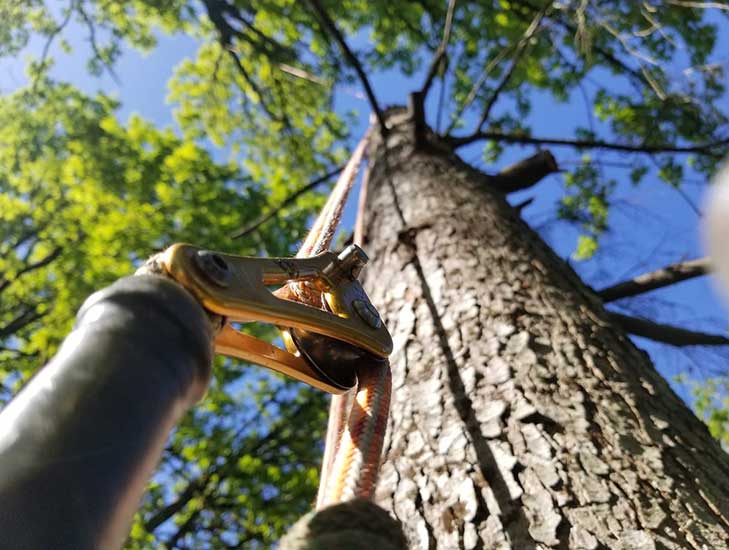
Aerial Assessments
What Is an Aerial Tree Assessment?
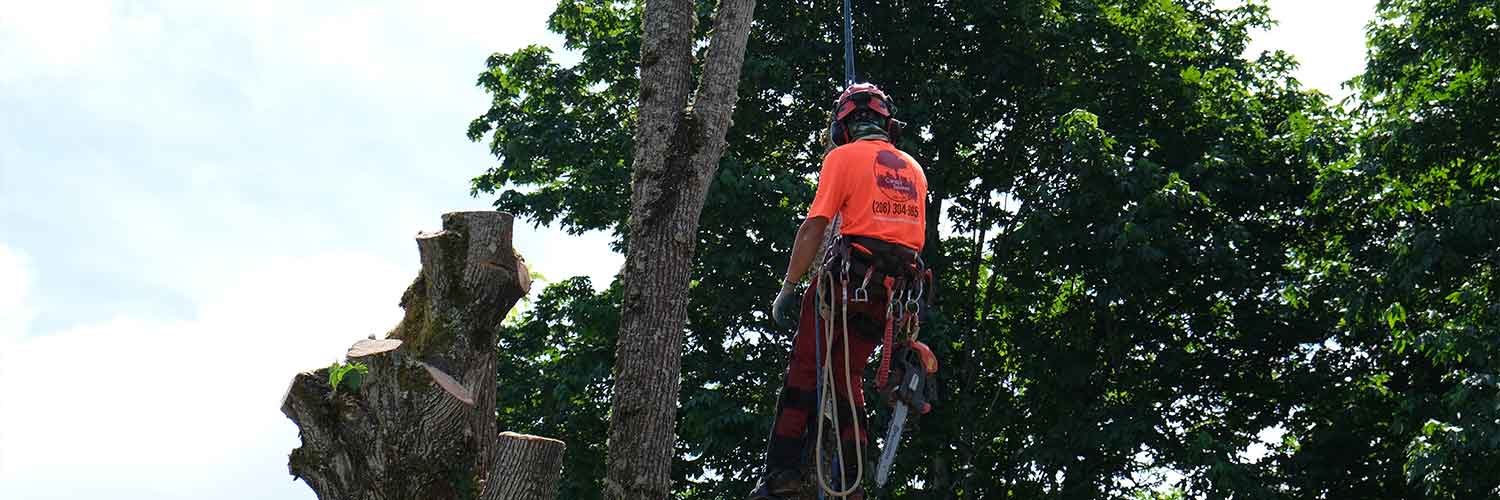
An aerial assessment allows an arborist to inspect portions of a tree that cannot be adequately evaluated from the ground, including upper-canopy structure, branch unions, cavities, and other areas of concern.
When Is an Aerial Assessment Recommended?
A closer canopy inspection may be appropriate when a ground-based assessment identifies a concern that cannot be sufficiently evaluated from below.
Inspecting Upper-Canopy Defects
Cracks, cavities, decay, weak unions, damaged branches, and other structural conditions can sometimes be better characterized through direct inspection within the canopy.
Cable & Support System Inspections
Existing tree support systems may require periodic inspection to evaluate attachment points, hardware, condition, and changes in the tree since the system was installed.
Aerial Assessment & Tree Risk
Information collected during an aerial inspection can supplement a tree risk assessment when additional detail is needed to evaluate a specific defect or structural concern.
What Happens After the Inspection?
Findings may support recommendations for pruning, monitoring, additional testing, support-system work, or other management actions based on the conditions observed.
Aerial Assessment FAQ
Not every tree requires an aerial inspection. We can first evaluate the concern and determine whether entering the canopy is likely to provide useful additional information.