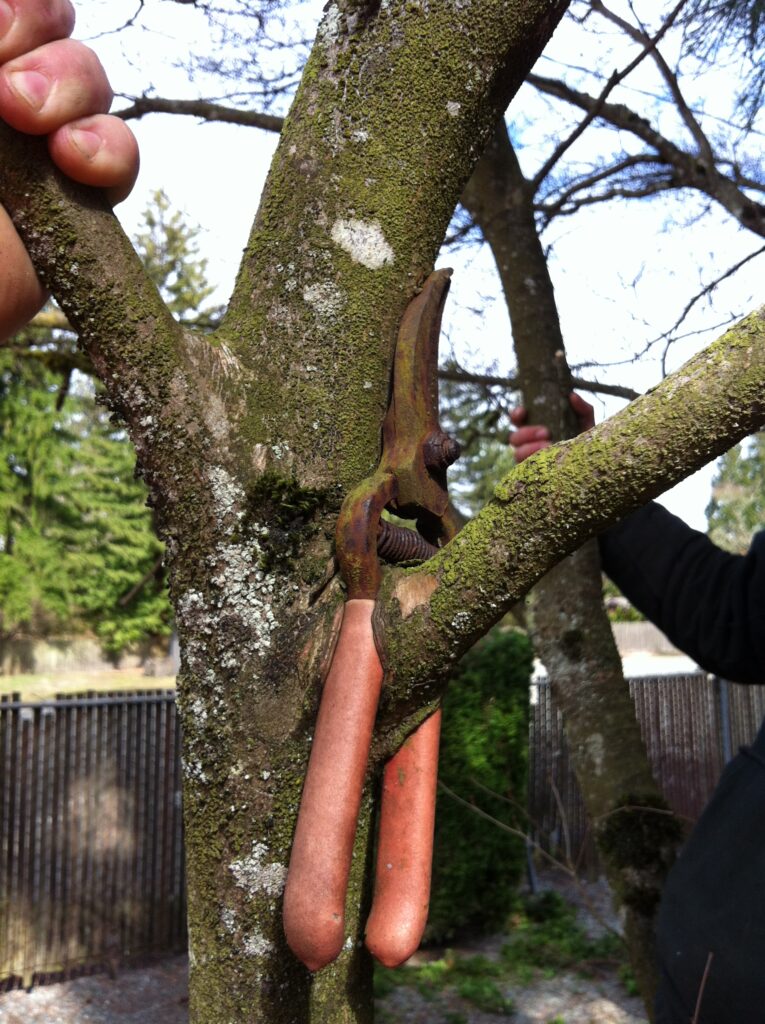
Fruit trees in the Pacific Northwest grow fast, dense, and disease-prone due to our cool, wet climate.
Unlike shade trees, fruit trees are pruned for biology, not just size. Every cut affects sunlight exposure, airflow, disease resistance, and how much fruit the tree will produce in future seasons.
Why Timing Is Everything?
For most fruit trees in the PNW — including apple, pear, cherry, plum, and peach — the most important pruning window is late winter through early spring, just before bud break.
This timing allows arborists to:
- See the tree’s full structure
- Remove weak, crowded, or crossing limbs
- Improve light penetration and airflow
- Reduce fungal and bacterial disease risk
- Prepare the tree for strong spring growth
Because schedules fill quickly, homeowners who wait until spring often miss this critical biological window.
Summer Pruning Requires Experience
Selective summer pruning can help control excessive growth and improve fruit color and ripening. However, cutting too much at the wrong time can reduce next year’s crop and stress the tree — especially in Western Washington’s already damp, disease-friendly environment. Professional judgment is essential.
What Happens When Pruning Is Missed or Done Incorrectly?
- Poorly pruned or neglected fruit trees commonly develop:
- Dense, shaded canopies
- Increased fungal and pest pressure
- Weak limbs that fail under fruit weight
- Smaller, lower-quality fruit
- Long-term decline
Once poor structure is established, it often takes multiple seasons of corrective pruning to repair — if it can be repaired at all.
Why Professional Arborists Matter?
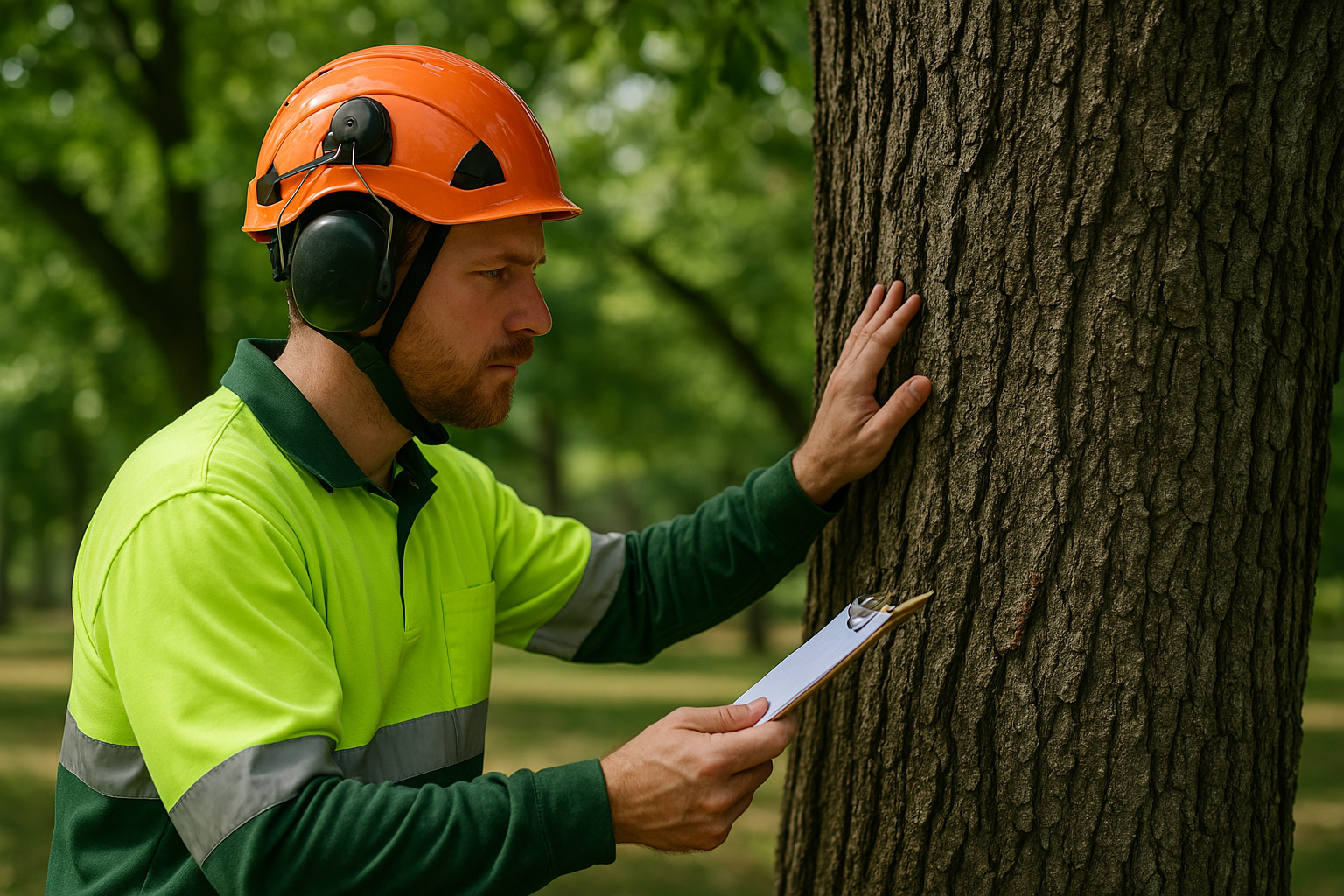
Certified arborists understand:
- How different fruit species produce fruit
- Where fruiting wood develops
- How pruning affects next season’s bloom
- How to minimize disease entry
- How to build strong, long-lasting structure
This knowledge is especially important in the Pacific Northwest, where moisture and rapid growth magnify the consequences of poor pruning.
The Bottom Line
Fruit trees don’t fail overnight — they decline from mistimed, improper, or rushed pruning. Scheduling qualified arborists during the late-winter pruning window is one of the most important steps homeowners can take to protect their trees, their harvest, and their long-term investment.
In the Pacific Northwest, good fruit tree pruning isn’t optional — it’s foundational.

Leave a Reply